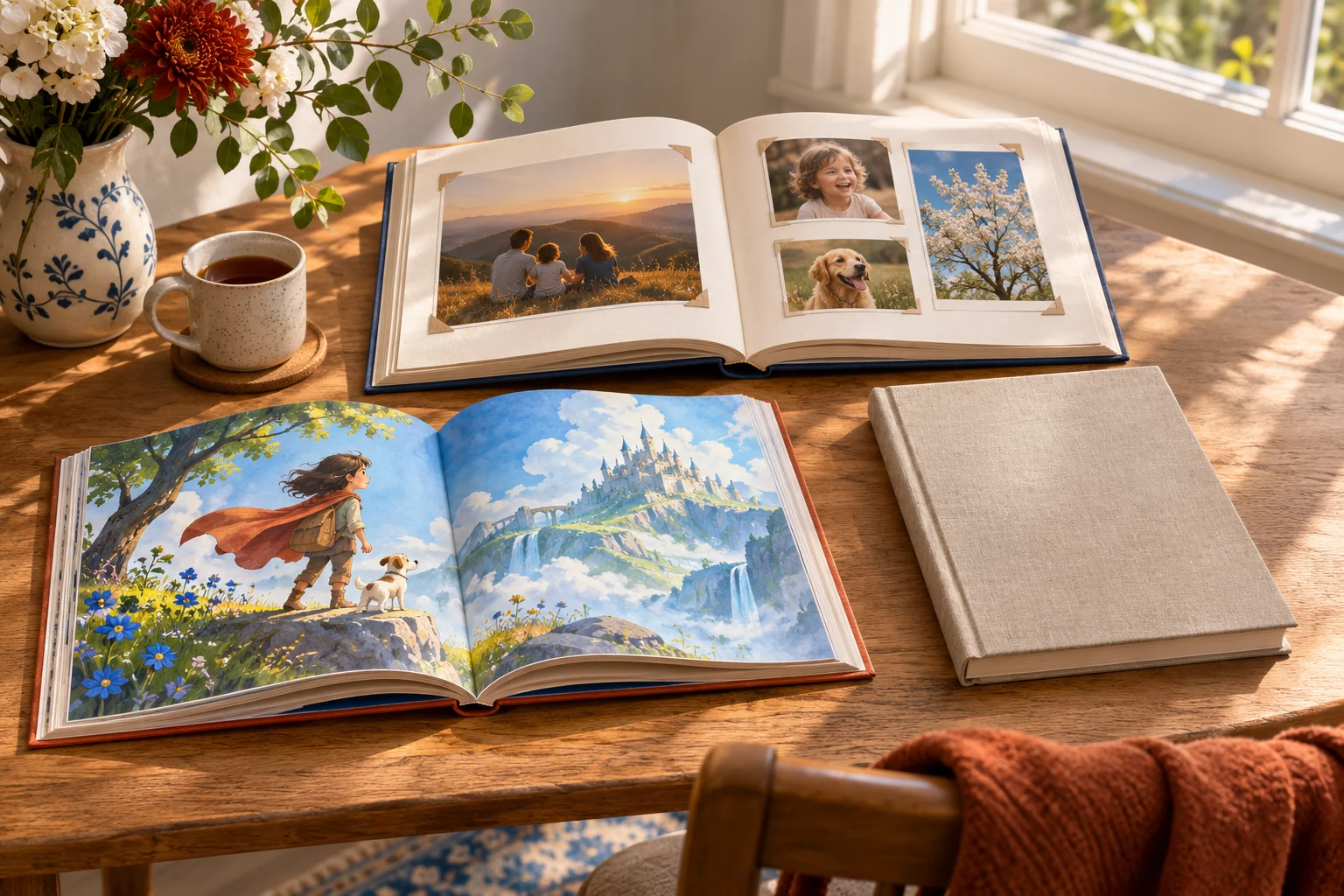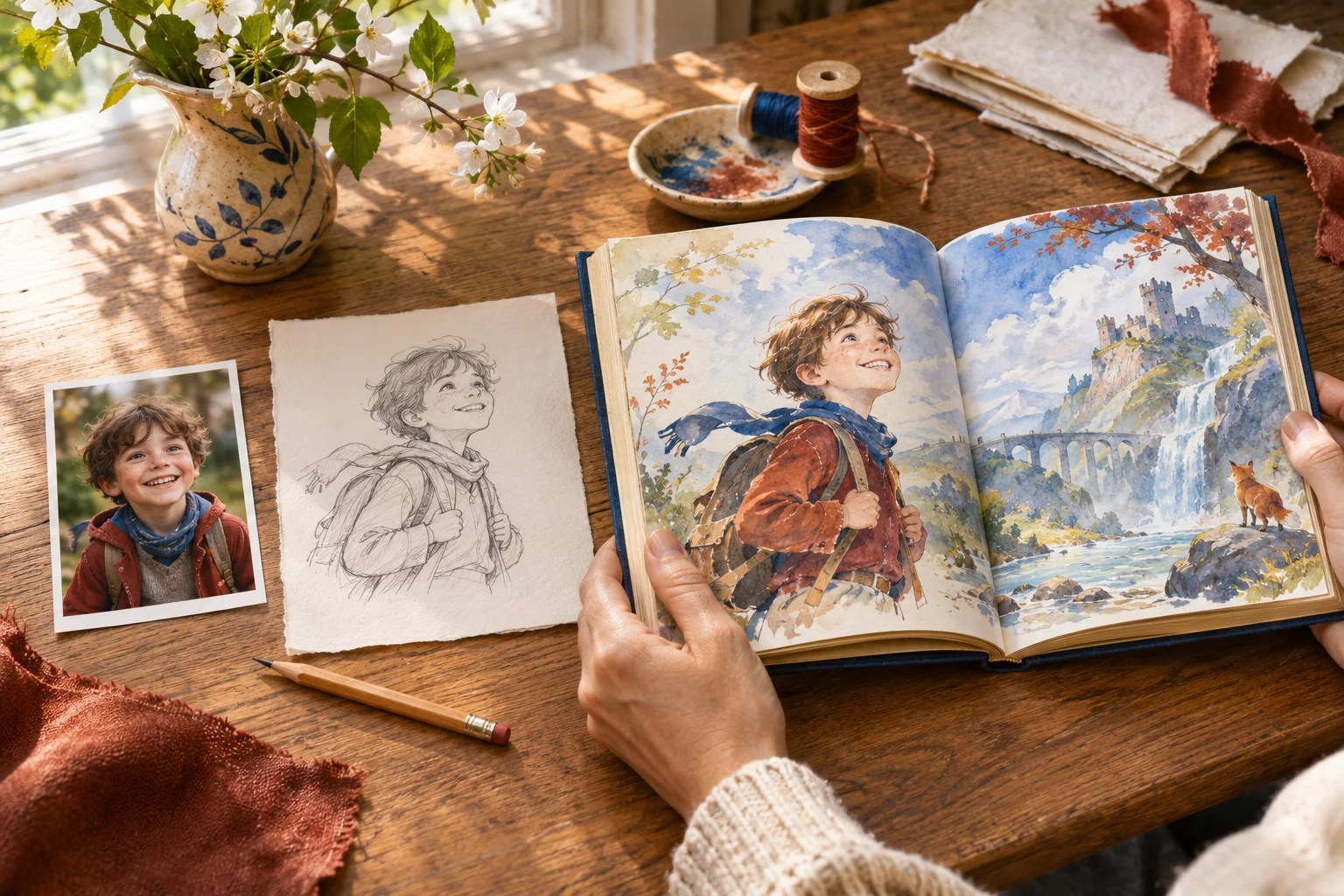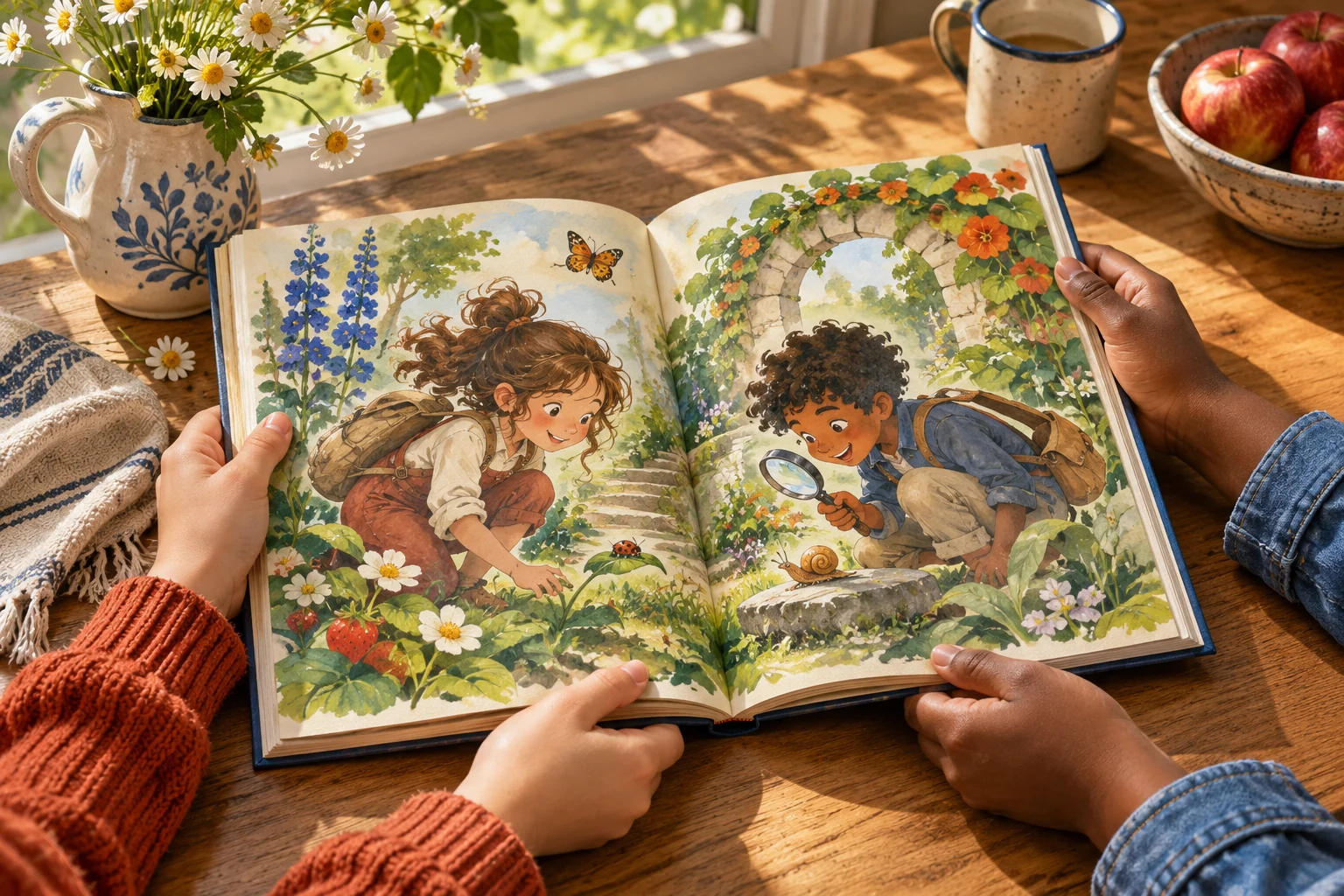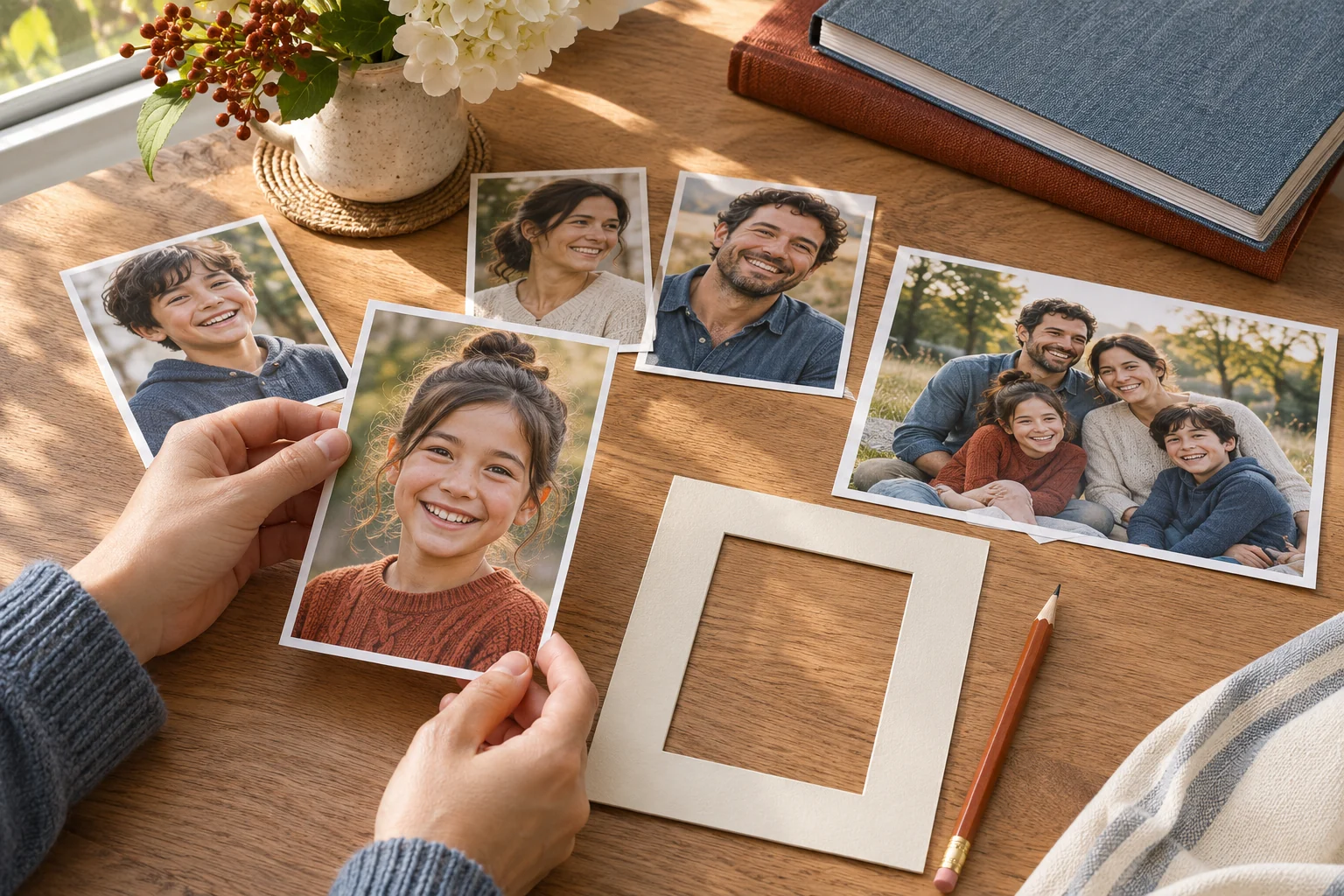
The short answer
For an illustrated likeness, begin with a sharp, evenly lit picture of one person and follow that seller’s upload instructions. For a printed photo page, choose an original file with enough pixels for the size of the placement. These are different requirements.
- A good reference portrait is not always a good full-page album photograph.
- Group photos can be useful in an album but unsuitable for a one-character input.
- Pixel requirements depend on the seller, printed size and crop; there is no universal file rule.
Match the photograph to the job
| The job | A useful starting point | What the seller specifies |
|---|---|---|
| Photo-derived illustrated child | One unobstructed face in even light. | Magic Story asks for the face and shoulders, looking toward the camera, with no other people. |
| A full-page photograph in an 8 × 8 Shutterfly book | A clear original with room for the final crop. | Shutterfly’s table recommends 2400 × 2400 pixels for this specific placement. |
| A two-child or child-and-pet story | Separate clear photographs when the selected product asks for them. | Check the supported cast and upload count; a group photo is not automatically accepted. |
| A family album | A mix of portraits and meaningful shared scenes. | Inspect every crop and any resolution warning in the editor. |
A comparison of published formats and features, not a physical quality ranking. Product options, availability and final prices can change; check the linked seller.
Which photo helps an illustrated character look like the child?
Choose a sharp, front-facing photograph with the child’s features visible and without strong shadows or filters. Follow the selected seller’s rules rather than assuming more photographs will always help.
Magic Story’s October 8, 2026 instructions specify a visible face and shoulders, even lighting and one child in the frame. They suggest trying the original image, with JPEG or PNG as a fallback when an upload fails. Those are that seller’s instructions, not a specification for every service.
Can I use a group photo for siblings or a pet story?
Use separate reference images when the product requires a distinct input for each supported character. A family group photograph may be excellent album content while being unsuitable for a single-character likeness field.
Check which characters the book can include before collecting their pictures. The upload form does not create extra cast capacity. A second child visible in the background will not reliably become a second protagonist.
How large does a photo need to be for a printed book?
Use the seller’s recommendation for the actual placement size, then inspect the crop and quality warning. A picture placed across a full page needs more usable detail than the same picture shown as a small inset.
Shutterfly’s upload guide gives 2400 × 2400 pixels for a full-page photo in its 8 × 8 book. That does not establish an AI-reference minimum or a rule for all printers. Cropping removes usable pixels; changing a file’s DPI label does not restore missing detail.
What should I inspect in the preview before ordering?
Look for cropped faces, details hidden by the binding, unreadable captions and an illustrated character whose appearance changes between scenes. Inspect the pages at a useful reading size, not only a small cover thumbnail.
Keep faces and important text away from the center fold and trim edge according to the editor’s guides. For photo-derived art, compare several scenes if available. If the free preview shows only one scene, find out what later review or correction stage the seller offers.
What permission and privacy checks belong before the upload?
Use an approved photograph and read the current policy for originals, generated characters, retention and deletion. A gift-maker should ask the parent or guardian before uploading a child’s picture.
Keep only the material the project needs. A seller’s ability to generate an illustration says nothing on its own about how it uses or retains the source file. For the broader choice between albums and illustrated stories, return to our book comparison.
Before you order
- Match the photograph to the exact product and supported cast.
- Use the original file, suitable lighting and an unobstructed face.
- Check resolution for the actual crop and print placement.
- Review permission, privacy policy and the final proof.
A few common questions.
Will a screenshot work?
Does setting a picture to 300 DPI improve it?
Sources & scope
We researched the product pages below. Check the linked maker for current options, availability and final specifications. These guides do not report physical product tests.
- Magic Story: photo requirements, updated October 8, 2026 ↗
- Shutterfly: uploading photos and resolution recommendations ↗
- TinyShelf: photo-derived examples and product-specific process ↗
Product information reviewed November 8, 2026. Check the linked maker’s latest options and specifications before ordering.